Monthly Archives: July 2015

How Empires Endure: TFA and History #3

A brashly overconfident emperor Emperor Valens, d. 378races to spring a trap on his foes and ends up falling in battle to a ragtag group of unsophisticated adversaries. This isn’t just the (highly condensed!) story of The Return of the Jedi‘s climax, it’s also the story of the Battle of Adrianople, in 378. There, the Roman Emperor Valens presided over the annihilation of sixteen regiments of Roman soldiers: two-thirds of the Eastern army. Of Valens, the Roman historian Ammianus Marcellinus wrote: “he was ready to gain advantage and profit at the expense of others’ suffering, and more intolerable when he attributed offences that were committed to contempt of, or injury to, the imperial dignity; then he vented his rage in bloodshed.” (The Roman History, Book XXXI, Chapter 5)
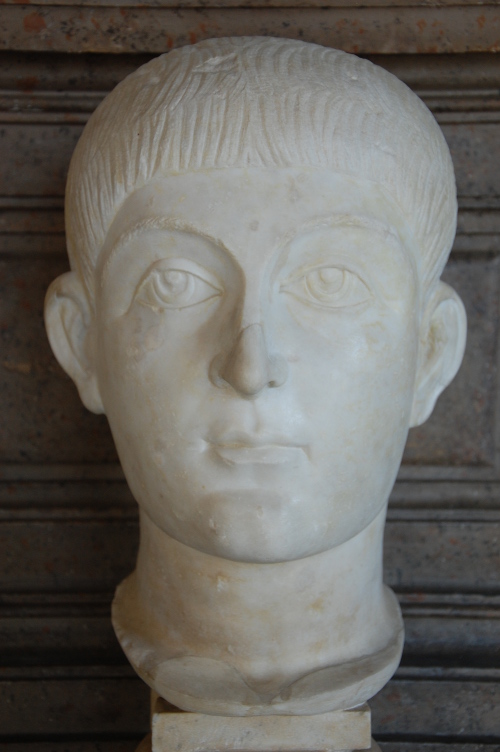
A bad emperor, he was less skillful than Palpatine, Emperor Palpatinewho perished during the Battle of Endor, victim of his own overweening confidence in the power of the Dark Side and the Death Star.
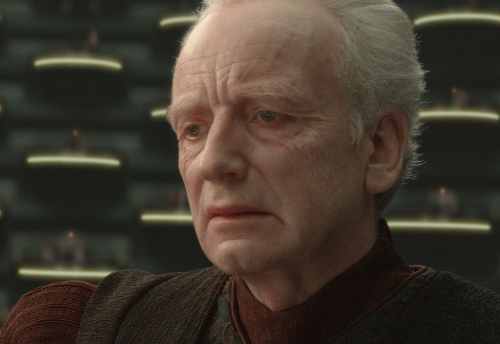
Everything that has transpired has done so according to my design. Your friends, up there on the sanctuary moon, are walking into a trap, as is your Rebel fleet. It was *I* who allowed the Alliance to know the location of the shield generator. It is quite safe from your pitiful little band. An entire legion of my best troops awaits them. Oh, I’m afraid the deflector shield will be quite operational when your friends arrive. — Emperor Palpatine, The Return of the Jedi

But whether capable or not, both emperors died and dealt a great blow to the empire that they ruled. However, was it the end of the empire? If we follow Adrianople, history tells us that, no, the death of a ruler in battle doesn’t guarantee the end of his empire.

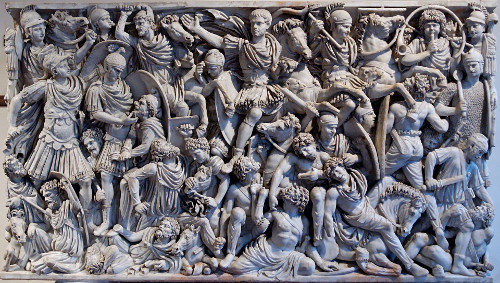
To the contrary, Rome’s empire far outlasted Valens’ own humiliating end at Adrianople. Goths and Romans at Adrianople(Depending on which account you prefer, he either perished of an arrow wound in battle or retreated to a stone building near the field which the enemies, seeking to overrun, then burned down with all in it.) 378 saw his co-emperor, Gratian, rally the empire with the assistance of a new co-emperor, Theodosius I. Constantinople, the imperial capital, withstood a Gothic assault and endured for over a thousand years longer as the empire’s chief city.
While Coruscant seemingly celebrated the empire’s overthrow in the final scenes of Return of the Jedi, in truth, what happened to the imperial fleet and its ruler at the Battle of Endor Space ships at the Battle of Endorwas hardly a game-changer. Even with many imperial ships destroyed and the new Death Star obliterated, what the Alliance defeated was only a portion of a vast, well-supplied and deeply entrenched imperial force. All of those planets, all of those starships and bases, all of those forces ready to rally at the call of the emperor or someone invoking his authority? It would be easy for the Empire to endure.

We’re already seeing from casting information and spoiler discussion that, in The Force Awakens, the Empire is not forgotten, even many years after the battle. New stormtroopers fight on behalf of an imperial cause that is further supported by a Force-sensitive warrior. With generals and Sith, it’s easy to expect that a new emperor will also arise. . . .

Comments Off on How Empires Endure: TFA and History #3

Filed under history, pop culture

Student Depression: More Than Helicopter Parenting

You’ve seen the story making the rounds amongst parents and academics that correlates helicopter parenting with college-age depression. You might well have nodded along as you read the horrific stories of awful parents who dictate their kids’ university choice, major and even study habits. These are truly wrong-headed individuals who, by micro-managing their children’s lives well into adulthood, deprive them of the chance to learn how to be independent, self-reliant and find their own happiness.

That said, I take issue with a big part of the article’s claims.

As parents, our intentions are sound—more than sound: We love our kids fiercely and want only the very best for them. Yet, having succumbed to a combination of safety fears, a college admissions arms race, and perhaps our own needy ego, our sense of what is “best” for our kids is completely out of whack. We don’t want our kids to bonk their heads or have hurt feelings, but we’re willing to take real chances with their mental health?

You’re right to be thinking Yes, but do we know whether overparenting causes this rise in mental health problems? The answer is that we don’t have studies proving causation, but a number of recent studies show correlation.

The emphasis is that of Julie Lythcott-Haims, author of the book from which the article is an excerpt. The former freshman dean at Stanford candidly admits that she knows this overactive parenting culture all too well and frequently has fallen into some of the bad habits she herein decries. I’m good with anything that helps to counter the scourge of parents who treat twenty-somethings as toddlers or leads to mom or dad buttonholing profs and TAs over what’s properly the student’s turf. And don’t get me started on that smooth rhetorical slide right past the whole correlation line because we all know correlation is not causation, right? Right!

In any case, I’m troubled by the easy equation of depression in college-aged people with the evils of helicopter parenting. Yes, that can be one factor, but is it the only or even the best? I’d say no. There’s a whole raft of reasons for the youth of today to be profoundly depressed. It’s the economy, stupid! We’re destroying the planet and waging war worldwide. Even if we focus in those problems directly affecting colleged-aged people who are actually going to college, there’s still enough fodder for a real-world dystopian Hunger Games: ruinous tuition increases, student debt that’s impossible to discharge, gutted support for students, dismal job prospects and political leaders enthusiastically dismantling public higher education. Oh, that’s cheerful, isn’t it? Let’s not forget how these young people have been hemmed in by decades of “No Child Left Behind” and other onerous testing regimes in their school lives, or communities that eagerly police the practices of “free-range” parenting. When students revolt against standardized tests, how are we surprised?

But ignore that man behind the curtain, Dorothy. No, look at the bad parents here and there. Why, they’re the cause of this whole problem! Let’s just get them to change their behaviour and, sure as shooting, young, crestfallen folk across the continent will start to perk up.

That’s ridiculous! This is a small fix for only a tiny slice of a big problem. But it’s easy, ridiculously easy, to stir up popular disgust with painful parenting practices such as those described in the story. Nobody can justify those excesses, but nobody can sustain the argument this helicopter parenting the key to the real mental health crises on university and college campuses or in those peer groups beyond the ivory tower.

Depression is an illness but there are people who can help you. Depression is serious, depression is real and depression isn’t banished by condemning over-the-top parenting practices. We need to accept that helping young people manage their mental health takes resources, commitment and actually paying real attention to their concerns.

So let’s stop feeling as if condemning one particular brand of bad parenting is what we need to do to support students with their mental health issues, okay? Thanks.

5 Comments

Filed under academe

True Patriot What Ifs

What really differentiates Americans from Canadians? We celebrate our grand national holidays almost simultaneously in early July. We share the better part of a continent and that very long, under-defended border. We watch much of the same TV shows (albeit with the annoyances of geo-location denials on websites) and movies. Wind, rain and snow crosses back and forth across the border with abandon and it’s often hard to tell where one country begins and the other ends if you’re crossing the wooded eastern reaches or trekking through the prairies.

A recent article by Dylan Matthews offered Three Reasons the American Revolution was a Mistake, zeroing in on the weaknesses of presidential democracy, the likelihood of an earlier end to slavery under British law and the slightly less awful Canadian record of First Nations abuses as ways in which an America without the revolution would be a better place. Over at Historiann’s, she’s taken up Matthews’ points and added a few other accolades of her own.

So is Canada the very picture of oppression? Far from it! In fact, Canada is a nation that offered its citizens national health insurance nearly seventy years ago; they had a woman Prime Minister more than twenty years ago; and while rates of gun ownership are high (they’re #13 vs. the U.S., which is #1 in the world), the risk of gun homicide (let alone random mass-murder) is quite low. Furthermore, equality before the law is guaranteed in the Canadian Charter of Rights and Freedoms, including sex and disability, two categories of people–more than half the population–not included in the U.S. Constitution and its amendments.

What reasonable person wouldn’t prefer Canada to the U.S.?

Aw, shucks, Historiann. You’ll put us all to blush and you know how apologetic Canadians can be in any case. Consider it doubled or double-double (I’ll spring for you at Tim’s).

Seriously, I have to agree that Canada is awesome. Otherwise, why would I have come north almost thirty years ago (this coming Labour Day weekend) and taken up Canadian citizenship early in this millennium? Okay, well, obviously, love for my dear spouse factored in mightily, but also love for this slightly more peaceful part of North America.

That said, I’d have to take issue with some of Matthew’s claims about the benefits of avoiding the American Revolution because, well, counterfactuals don’t work that way. You can’t be certain that because the British abolished slavery in the 1830s America would have been freed of slavery a generation ahead of the Civil War. Some scholars suggest that slavery was the most significant root cause of the Revolution in the 1770s. Others have pointed out that the British both supported slaves against their masters and held out hopes of retaining the southern, slave-dependent states during the course of the colonial contretemps.

Against Matthews’ rosy suggestions of a Canadianized USA, the picture becomes much more hazy. For instance, I have difficulty dismissing the southern states as an impotent rump within British imperial politics in the 1830s in our counterfactual Revolutionless timeline. To keep the colonials within the empire in 1776 wouldn’t have been without cost. Concessions and new connections might have shifted the balance of power in significant ways, possibly strengthening the southern hand within imperial politics. Might this have served to embolden them to armed rebellion at the whisper of legislation of abolition in London in the following decades? Or maybe we would see the change coming from the enslaved multitudes, perhaps rising out of a Caribbean context where, unmediated by American and French revolutionary exemplars, uprisings could have skipped across the sea to those slave states and inspired a real crisis not just in the colonies but back in Britain?

You know that I love counterfactual history something seriously. “What if” makes for interesting thought experiments that historians need in their toolboxes but it’s not either/or. We aren’t faced with the choice of either our current USA or our current Canadian situation if something in the past had gone differently. If history had zigged rather than zagged in 1776, we’d be living with the long range consequences playing out in ways that casual contrast just doesn’t cover. And who knows whether or not we’d have our Tim Hortons?

1 Comment

Filed under history, personal