Category Archives: history

Strange Medicine

Healthcare was largely a woman’s province in the early modern period. Diseases were fought and injuries treated at the home and it was women’s work to know how to treat all sorts of these problems. That’s why, when you venture into manuscript collections of the period, you’ll find a serious gender divide in what readers collected in their commonplace books.

A commonplace book was a collection of texts and tidbits appealing to its owner. I’ve studied many commonplace books over the years, men’s and women’s. Most of the men’s collections included witty epigrams and learned passages taken from longer works of scholarship. Women’s commonplace books are almost always very practical collections. We might call many of these “recipe books” although the recipes within weren’t always food for the table. Instead, they were recipes for the medicines these women would prepare and use to treat people in their household.

In 1639, Katherine Packer collected “Very Good medicines for Severall deseases wounds and sores both new and olde”. These weren’t evidence of idle curiosity as Packer’s next line indicated. Instead, these recipes were tried through “carefull practice.”

Here’s one example I transcribed a few years back:

To make childrens teeth grow with little paine hang about the necke anoules tooth that the child may red the goomes . . . when you make the first pape for the childe the mother must milke therein a little of her milke & let the childe eate * the teeth will grow wthout paine. Probatum est

Probatum est – “It has been proven”. Packer had either herself enjoyed success with this cure for a child’s teething pain or known someone who had done so. Fascinating, no?

Examine some of Packer’s medical manuscript thanks to the fabulous Folger Digital Image Collection (This is Folger MS Va 387 if you’re interested).

6 Comments

Filed under history

Come to Potterfest 2012

I’ll be giving the keynote at Edinboro University’s 2012 Potterfest‘s Ravenclaw Conference focusing on the theme of human rights and animal rights. The conference runs October 18-20, 2012 and will feature both public and academic aspects. A Quidditch tournament! A chance to take in the National Library of Medicine’s traveling exhibit on Harry Potter’s World: Renaissance Science, Magic and Medicine.

I think this keynote invitation is a great fit given my contribution about women’s history to Harry Potter and History, “Witches vs. Women: What Muggles Could Learn from Wizarding History”. Trust me, there’s a lot more about the wizarding world that didn’t make it into print so there will be more to discover.

As part of Potterfest 2011, the organizers archived a selection of papers that is linked from the Potterfest main page – check them out. I’m reading one about Hermione Granger written by Sheila Gross, a graduate student from Gannon University, and happily anticipating what will come for the 2012 edition.

6 Comments

Filed under academe, history, pop culture

Super Size My Seminar

I’m wrapping up the 2011-12 term this month. One aspect that’s felt luxurious has been my seminar. It’s both been a good class and a small class with under twenty in either term. (Pro tip to faculty wanting to shrink their course sizes: schedule your class for 8:30 on Friday and then have the registrar screw up the listing to suggest it starts at 8:00. You’ll scare all but the determined or the desperate away!)

Next year, the picture is bleak. Due to budget constraints and sabbaticals, we’re offering very few senior seminars: fifteen credits worth (or 2.5 full year options). Students with a concentration in history have to take twelve credits of seminars to graduate while majors only need six. Theoretically, fifteen credits should be enough but not when you factor in the large number of majors and concentrations history attracts. And I don’t even get the scary Friday morning time-slot for my seniors. This fall and winter, I meet my seniors on Wednesday mornings. (Grad students? Prepare for a Friday morning fun-fest!)

The crisis of classes and credits has become personal for me in the looming fall and winter terms. I’m teaching six of those fifteen credits offered in our program: seminars on Tudor Britain in the fall and Stuart Britain in the winter. Having crunched the numbers and chatted with others in the department, I safely expect to see a record-setting enrollment of more than 38, especially since some majors have ambitions of finishing up their 2012-13 coursework in the fall term by taking my seminar in conjunction with another scheduled for the fall. In the winter term, mine will be the only senior seminar into which a student in need of seminar credits can enroll (the other six credits on offer is a fall/winter course): also an enrollment booster!

Help?

I’ve told our admin that my ‘hard cap’ is 44. There are twelve weeks in the term and every student needs to make one in-class presentation the way that I run seminars. (I’m not willing to negotiate on the presentation component: I don’t consider it a seminar without students having to prepare and make a formal in-class presentation.) Week one won’t count for those purposes since I can’t get students ready to present before class has begun. So there are only eleven weeks left and I know that I can’t run a good discussion session in a three-hour class and take time for more than four oral presentations. The math is then simple: 4*11=44.

Gulp!

Now I have to come up with 44 presentation topics stretching from Henry VII’s reign through Elizabeth’s (with forays into Scots and Irish history along the way). I’ve used biographies before: these are very easy to generate as topics but also quite easy for students to plagiarize. Nothing demoralizes an educator quite like listening to your senior students read the Wikipedia entry word for word! I don’t want to use articles or monographs for presentation topics: these tend to turn into snooze-fests as most students do little more than summarize the contents.

I’ve toyed with the thought of having the in-class presentations be on historical events but I’m a bit staggered at the thought of coming up with so many topics that I can also equally and usefully distribute across the 1485-1603 period so that we’re not having someone present on an early Tudor topic when the discussion’s all about late Tudor wars! So wish me luck or give me suggestions of the almost four dozen topics I’ll need to nail down for Tudor history presentations before the syllabus goes to the press in late August. Please?

9 Comments

Filed under history, teaching

Pleasure Reading: Looking forward

It’s the weekend (well, almost) and except for marking, two chapters to write and many others to edit, I’m free! Well, let’s not forget the normal household and personal chores. But close enough, eh?

I’m dangling a reward in front of my eyes for when I hit the next marking milestone: reading Alan Taylor’s The Civil War of 1812: American Citizens, British Subjects, Irish Rebels and Indian Allies. I picked up the book on the recommendation of a former colleague, Dr. Andrew Smith, who blogged about Taylor’s book in December.

After all, we’re celebrating the 200th anniversary of the War of 1812 this year: shouldn’t I get back to a topic I haven’t touched since Professor Million’s Indiana History class that I took as an undergrad?

I’m two chapters in and quite hooked, but I’ve sworn to hold off reading the rest until I get more marking done. It’s a thick book (about 450 pages of text with another 150 of apparatus) and will take hours to digest. What’s slowed me down is that it’s in a volume that’s heavy enough so I can’t just drop it in my purse and haul it everywhere (I tend to pleasure read in fits and starts when I’m on the go with my busy family).

Another busman’s holiday, I suppose: I grew up not far from the site of Prophets-town and the Battle of Tippecanoe. Tecumseh was a household name but there’s already so much in Taylor’s story that I’m learning anew, particularly Canadian history elements but also some useful perspectives from my European interests. Even if I don’t often teach the modern topics (and my research interests stay mostly before 1750) this book is shaping up as a valuable read!

Let’s see if I can get the two sets of tutorial responses marked early enough this weekend that I can get back to this fun book.

Comments Off on Pleasure Reading: Looking forward

Filed under history

Who’s Afraid of Quantification?

When I decided to become a history major, the counsellor/advisor at my undergraduate university looked at my transcript to date and said “You should go into quantitative or maybe architectural history.” I admit, with courses in an accelerated calculus sequence, a joint grad/undergrad course in statistical analysis and classes in optical mineralogy, mechanical engineering and what have you, that might have seemed like a good fit. But the aspects of history that interested me most weren’t in statistics or buildings. Even then, I was interested in texts and politics, personal or national.

That said, I still love to play with numbers and technology. I used databases while I was in grad school in the late eighties to do everything from manage conference registrations to a meeting of the RSA our institution hosted right through tracking all the Henrician texts I reviewed for possible use in my thesis. I’ve recently returned to topics for which statistics makes sense, working with some data drawn from The Old Bailey Online and London Lives. Every few years, I teach a unit combining statistical analysis and the history of crime in Britain since 1600 to our sophomore majors.

Some of them are afraid of numbers. The overlap between people who choose to be history majors and people who feel they’re mildly innumerate is large. Many of them are also students in the B.Ed. program where they have to take an introductory statistics course. Many of them still bear the scars of that course (which, by itself isn’t a bad course, but it has to try to be all things to all people and, when you have a decent percentage of math-phobes, that’s daunting).

Few of my colleagues here in Laurentian’s history program are deeply into quantitative history, at least that’s my impression. (I could be wrong: correct me, please!) But recent discussion in the department has started us thinking about quantification. I’m dusting off my old notes and pulling down my copy of Making History Count, not that I have a lot of time to explore anything unrelated to marking and my next chapter project at the moment but I’m pretty sure this summer’s research plan is going to require me to do some quantification and I want to re-engage those old brain cells appropriately.

Wish me luck!

5 Comments

Filed under academe, history

The Siege of Washington

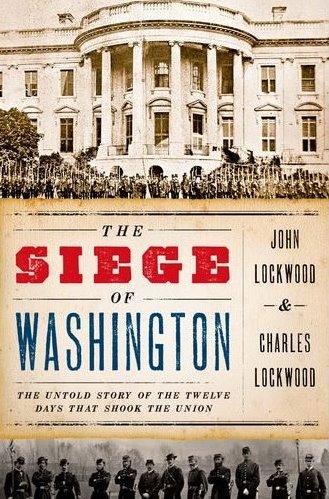
Cover of The Siege of Washington Even though I’ve been buried so deeply in work that I can barely breathe, I stole some free hours to read this book. Correction: nearly devour. Even though the authors employ an annoying strategy of drawing out the slow, chronological progress (so that hours sometime read as if they were days and the actual days of story’s timeline read even longer), The Siege of Washington remains a good history, superbly grounded in both historical research and engaging narrative.

I’m not that much of an American Civil War buff. Most American history leaves me yawning: likely a result of over-exposure in my childhood and youth. But this narrowly defined topic was entirely new to me: the history of Washington’s perilous experience between the fall of Fort Sumter and the arrival of volunteer troops sufficient to defend the capital, all within a few days in April, 1861. The authors, John and Charles Lockwood, paint a picture of the divided city and its people at Lincoln’s inauguration. The juxtaposition of disgruntled supporters of the Confederacy with eager suppliants to the new Lincoln White House makes for an interesting backdrop. This crisis creeps up almost unseen on a city in the midst of transition from one presidency to another, given the wealth of patronage appointments.

The Lockwoods do a good job of setting 1861 Washington into a broader context of regional politics and economics. I’ll never look at Baltimore the same way after reading about its “Mob City” moniker and the ways in which its citizens reacted to the passage through of Union volunteer troops. The first battle may have come some months later, but the first deaths of the war occurred right there with troops attacked by townspeople.

The book is overflowing with delicious anecdotes, from the surly troops in the Capitol who were bayoneting Jeff Davis’s desk (until chided for destroying government property) to the story of Clara Barton’s life as a government clerk before she founded the Red Cross when she saw the need in the injured volunteers from her home state of Massachusetts. The newspaper reports and eyewitness accounts give the history a lively sense of urgency and depth.

The only annoying part of The Siege of Washington was the authors’ conceit that Washington would possibly, maybe, oh-wait-and-keep-reading! fall. I knew enough of the history to know that was a non-starter and I expect almost every reader will be similarly unsurprised. That said, their final chapter, tackling the variety of “what ifs” and “if only”s put forward by contemporaries at the time or soon after makes for fascinating historical reading. To see how people of the time recognized this as a key moment in their history was a clincher for me and something I expect others would equally enjoy.

2 Comments

Filed under history, review

Old Books: Old Friends, False Friends?

I’ve been re-reading Jocelin of Brakelond’s Chronicle of the Abbey of Bury St. Edmunds (also available in an out-of-copyright edition at the Internet Medieval Sourcebook), preparatory to leading my seminar students in a discussion of the work. This will be the fourth time I’ve read the book (twice in the last four months, alone).

Every time I re-read a book, I discover new elements or rediscover new aspects to deepen my understanding. Some are wonderful tidbits to crow over and collect for my mental memory-book. Others are realizations to ponder. It’s not so far-fetched to say that old books are old friends but sometimes they’re not all that familiar.

Much as I love the humble and human level of story-telling in Jocelin’s account of his Abbey’s high-flying leader, Samson, and the community’s role in the Angevin world, it’s not entirely an easy read. Bringing the book to my senior seminar the other week, I asked them to unravel some of anti-Semitism in the chronicle. My last review before teaching had made that element stand out all the more to me. I elucidated the context of stories such as “Little Sir Hugh” for them so they understood how some of the references you could easily gloss over in Jocelin were part of the virulent and hateful attitude. They agreed with me that it was a disturbing reality check in their otherwise comfortable chronicle reading.

Thinking all of this through makes my smile dim as I put Jocelin back on the bookshelf beside my desk. I still admire the book but I don’t know how much I can enjoy it even if I enjoy teaching it all the more for using the Chronicle as a way to approach such an important subject. It’s a useful book but I’m struck, anew, by how the past is not a place I’d have wanted to inhabit more than my own time.

Have you ever had to negotiate this same unsettling realization in your reading or teaching?

Extra bonus: Steeleye Span performing “Little Sir Hugh”

2 Comments

Filed under history

Seeking Historian of Science

My department is seeking a historian of science (or an extremely capable scholar of western intellectual history) to administer a distance education course this summer (May-July) and next fall/winter (September-April) in the history of science that surveys the field from antiquity through the twentieth century.

HIST 3905 History of Science (A study of the rise of science in relation to the development of Western society) has been prepared with an excellent, comprehensive course manual that students will read along with the assigned textbooks: Ede, A. and Cormack, L. B., A History of Science in Society: From Philosophy to Utility (2004), Larson, E. J., Evolution: The Remarkable History of a Scientific Theory (2006). The course structure has been set but it will still require someone who’s familiar with the field to administer successfully and to assess student assignments.

HIST 3905 is offered via our Envision program and is conducted online.

Interested applicants should send to the Department Chair, Dr. Sara Burke, a letter of application, a current curriculum vitae, a current teaching dossier and any relevant supporting documentation.

Department of History
Laurentian University
935 Ramsey Lake Road
Sudbury, Ontario
P3E 2C6

Consult the Laurentian University 2011-14 Collective Agreement (for rates of pay) and see the terms of the last posting here. The closing date is now 6 March, 2012.

Please circulate widely!

Comments Off on Seeking Historian of Science

Filed under history

Victoria and the Expectations of Queenship

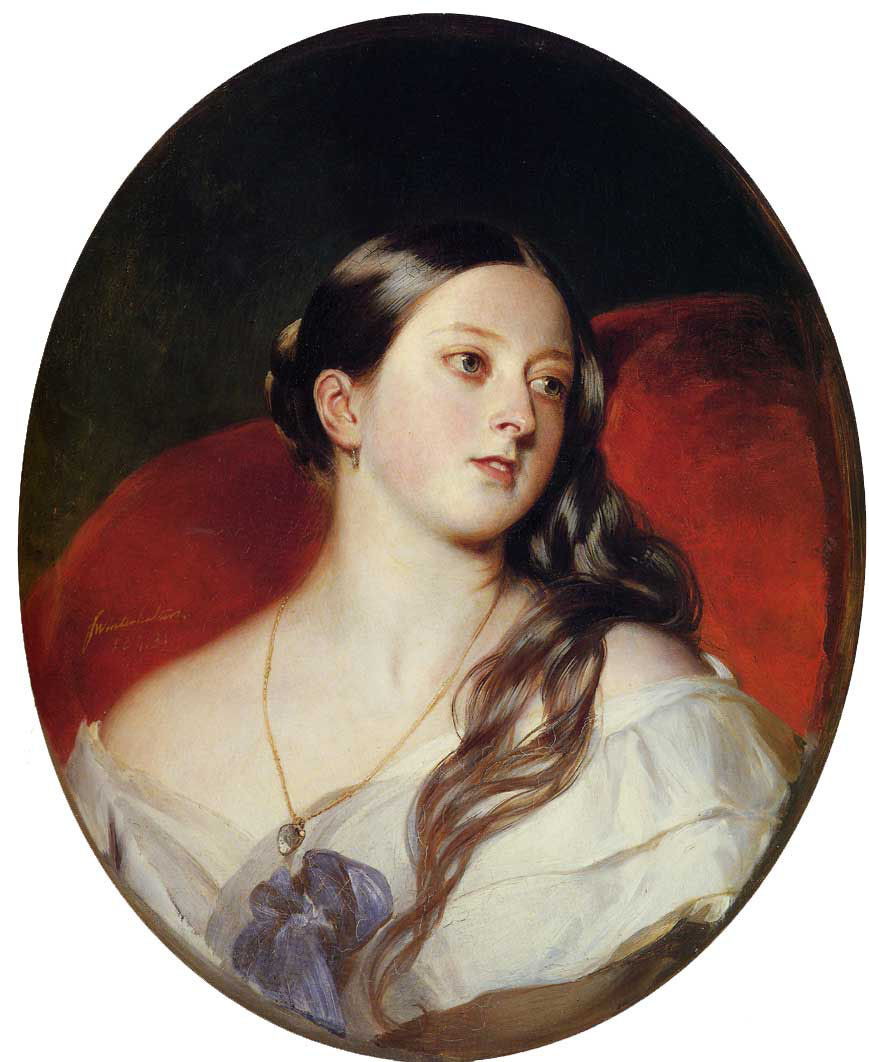
Queen Victoria, 1843 (An outtake from my latest pop culture and history project.)

From soon after her birth in 1819, it was clear that Victoria would inherit the English throne. The childbed death of her cousin, Princess Charlotte, left a succession of aging men to sit the British throne, none of them with sons who could inherit. Young Victoria was raised away from the limelight of the royal court in her mother’s isolated household within Kensington Palace. Seemingly innocent of her destiny until she was provided with a genealogical chart that showed she was next in line to the throne, the young princess solemnly promised her governess, “I will be good.”

When she took the throne not seven years later, Victoria did just that: setting a model of virtuous conduct that endeared her to a nation. But it was clear that some in the country were nervous about the accession. At the outset of her reign, The Guardian expressed reservations about her youth and character.

The accession of our young queen is a circumstance full of hope and promise. Humanly speaking, it is perhaps desirable that the event should have been postponed a few years, that her character might have become more fixed, and her acquaintance with the world and with those branches of knowledge which are peculiarly appropriate to her situation and her duties, more enlarged. But it has been ordained otherwise, and, we have no doubt, ordained for the best. From all that we have read and heard, her majesty’s conduct hitherto seems to have been marked by great propriety both of feeling and demeanour.

Speaking of William IV, Victoria’s immediate predecessor, The Guardian elaborated on the question of personal conduct:

It is often said that the public has no concern with the private lives of princes. We are not of that opinion. For whilst we would neither seek to create nor to gratify a prurient appetite for scandal, in relation to a subject with respect to which that appetite is so easily excited as the vices or follies of the great, we do feel that it is a circumstance which strongly conduces to the welfare and interest of a nation, when the monarch, instead of being an insulated and selfish voluptuary, is known to be constant and unostentatious in the fulfilment of domestic duties, and the natural display of tender and virtuous affections. – The Guardian, 24 June, 1837

While William and Adelaide were a contented couple on the throne, William’s past wasn’t always so flawless. This report completely overlooks his long liasion with Mrs. Jordan by which the happy couple had ten illegitimate children that preceded his late-in-life marriage to Adelaide. But it’s clear from both the reservations about Victoria and the happy recollection of William that some in the country were concerned with the new queen’s prospects. Would she hew more to the model of her late uncle William in ensuring that her time on the throne was a period of relative sobriety with a royal focus on good government or would her reign be touched by scandal and discord as had coloured the monarchy of her other uncle, George IV?

Victoria was fortunate in that she was old enough upon her accession to rule in her own right, without her domineering mother (and her mother’s ambitious aide, John Conroy) to exert their influence. Alison Plowden suggests that her beloved governess, Louisa Lehzen was the key. To this I’d also add the broader cultural context of childhood and the Georgian concepts of virtue which filtered into Victoria’s schoolroom (consult Lynne Vallone’s nuanced study for some excellent examples).

Of course, the next expectation that Victoria had to fulfill was marriage and securing the succession. Since Charlotte’s childbirth death, the royal succession was extremely fragile. Victoria married a dashing young prince, Albert of Saxe-Coburg and Gotha, with whom she appeared to be deeply in love. While marriage was clearly desirable, opposition arose to their union mostly in the grumblings among some Englishmen at the prospect of yet another foreign consort, in the model of Princess Charlotte’s widower enriching himself from England’s industrial plenty.

Victoria’s marriage was not simply for the benefit of the state. Her personal investment in the relationship was both the touchstone of Victorian ideals of domesticity but also a danger sign for the stability of the monarchy. Victoria and Albert enjoyed over twenty years of marriage before tragedy intervened when he fell ill with typhoid fever. Albert`s death in 1861 was a difficult blow for the queen. Even with their nine children and a nation to lead, Victoria found it hard to carry on. The devastated queen withdrew from public life for a decade and this act of mourning alienated her from many of her subjects. In 1864, someone anonymously affixed a satirical poster to the gates of Buckingham Palace, offering the property “to be let or sold in consequence of the late occupant`s declining business”. Victoria finally returned to public life in 1871 but never gave up the black mourning dress worn to remember her beloved Albert. Inspiring a ten-year withdrawal, the virtuous conduct of the genuinely grief-stricken widow was not what the pundits and wags would have wanted, but Victoria was clearly her own woman in this and in other ways.

References:

Alison Plowden. The Young Victoria. (New York: Stein and Day, 1983).

“The Accession of Queen Victoria.” The Guardian. 24 June, 1837. http://www.guardian.co.uk/uk/1837/jun/24/monarchy.fromthearchive Accessed 17 January, 2012.

Lynne Vallone. Becoming Victoria.. (New Haven: Yale University Press, 2001).

1 Comment

Filed under history

Ask the Right Question

Last term I instituted a new scheme in my intermediate level courses: require short presentations on pre-assigned discussion questions from every student and recycle those questions as essay fodder for the tests and exams. It’s done a fair bit of what I want: ensure that even in a class of eighty, students were speaking every day without my resorting to picking faces out of the crowd. It also led to a lively culture on the discussion boards in our course software as part of the mark was not only for oral presentation, but for posting a polished version of that classroom comment and then responding to others.

I’ve had a lot of positive feedback from students who’ve appreciated this system, particularly that the questions are provided ahead of time so they can prepare for class with that opening theme in mind as well as know that can guide them in test preparation. I’m sure that there are others who’re not quite so happy, of course. I hope none of them are as disenchanted as this group of students at Utah Valley University but I do have tenure and a supportive administration behind me. (Of course, I accommodate students who can’t do oral presentations, say, for the student who has a nasty sore throat on the day – they can provide me a short paragraph, suitable to project via PowerPoint and I’ll share that in class with an invitation for the entire class to respond. But there were only 3 students who needed that accommodation in last term’s survey of eighty!)

I’m finding that the most difficult part of this is designing the best question that I can for each class session. I’m writing questions with the day’s reading in mind. Sometimes the text offers a great opening for interpretation and debate. Other times the ‘angle’ isn’t so obvious and I waffle for hours, reworking the question until I find something with which I’m happy. Because I’ve committed myself to not only using the questions in the class session, but also in the tests, they also have to be open for a broader, thematic analysis when it comes time for the quiz, midterm or semester final exam. So spending time on the questions pays off. That’s how I spent a great deal of time in the week leading up to course launch: tweaking with the discussion question list. Now it’s set in stone and I have a bunch of class sessions already full subscribed with students who’re excited to prepare for their turn.

They’re not magic tools but pre-circulated discussion questions with students presentations are definitely staying in my survey repetoire!

6 Comments

Filed under history, teaching