Category Archives: history

Droolworthy Digital Resources

Sharon Howard, at Early Modern Notes has alerted us to a new project in which she’s involved: Manuscripts Online: Written Culture from 1000 to 1500. Colour me excited!

She describes it as a kind of Connected Histories for medievalists. That’s also a fabulous resource for anyone working on British history circa 1500-1900. With resources such as this and my beloved materials linked via London Lives, 1690-1800 and the perennial favourite, Old Bailey Online, 1674-1913.

I tell my students they have little idea how fortunate they are. Digitization has revolutionized so much of the gruntwork of historical research. Whereas we were fortunate to have microfilms and microfiche of some manuscripts and many early books at my doctoral institution, a lot had to be taken on faith that the research trip to the other side of a continent or the other side of an ocean would pay off. Current students can get a good hard first look at a lot of research material online. Some of the digitization is of such high quality and so extensive (many of these sites are not only images, but include adeptly managed text conversion with connections to a searchable database) that you can use the material for so many digital humanities hacks.

I’m thinking that, if I have the time for next fall, to rejig part of my methods course for the grad students so that they practice with using and creating a small version of such a project. I’d have to identify a suitable source or set of sources and get an installation of Omeka, software to support elegant and extensible online exhibitions, up and running. Obviously, nothing I can tackle right now as I’m snowed under with marking, editing and writing, but definitely a goal for the near future.

Hrm. I wonder if this small digital humanities project might be suitable for an internal-to-the-university research grant?

Comments Off on Droolworthy Digital Resources

Filed under academe, history, teaching

Why Can’t a Woman?

Here’s a familiar sociological catch-22: Women are enjoined to be “more like a man” but will be condemned for being too “mannish” if they do so.

Pick any historically prominent woman and chances are you’ll encounter some version of this charge. Take for instance, one of the women I’ve researched: Margaret Pole. Daughter to George, the Duke of Clarence, Margaret survived the upheavals attendant upon her father’s suspicious death in the Tower as well as Henry VII’s rise to power. (Her brother Edward, wasn’t so lucky: held in custody by both Richard III and Henry Tudor, he accused of plotting an escape, attainted and executed in his turn for treason in 1499.

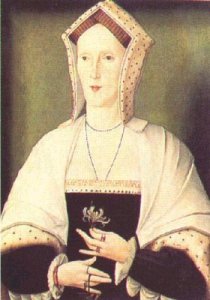
Margaret Pole Margaret was married off to a loyal follower of the Tudors. When her husband died, she and her children fell on hard times until Henry VIII’s coronation. Her young relative showered Margaret with honours: a title, lands and wealth became hers as the new countess of Salisbury. When Margaret and her family sided with Catherine of Aragon and the traditional church in Henry’s break with Rome, the writing was on the wall.

In 1538, Henry’s ministers focused on Pole’s family and circle as traitors supporting a foreign-supported invasion of England. Some of Margaret’s sons cracked under torture: confessing their complicity in a plot that brought in other noble families as well as their brother, Cardinal Reginald Pole. Margaret resisted all accusations of treason in a grueling series of interrogations, as her weary examiners explained in a letter to Thomas Cromwell. “We have dealid with such a one as men have not dealid with to fore us, Wee may call hyr rather a strong and custaunt man than a woman.”1 It didn’t help. Thomas Cromwell trumped up charges against Margaret that led to her attainder and eventual execution.

Sounds all too familiar, doesn’t it? What other historical women do you know have been accused of being too much like a man?

Notes:

  1. William Fitzwilliam, earl of Southampton and Thomas, bishop of Ely to Cromwell, 16 November, 1538, Letters and Papers XIII (2), no. 855.

2 Comments

Filed under history, pop culture

“Die and be damned”

In the fall of 1742, William Bird was tried for two murders although six women died on his watch one hellish July night. Bird’s trials provide an interesting insight into the lives of marginal women and the slightly less marginal men who assisted in the catch-as-catch-can aspects of justice as it was practiced in eighteenth century London.

As watchhouse keeper of the St Martin’s Round-House, Bird customarily acted as constable, receiving and housing prisoners who would later be examined by a magistrate but he lacked the official standing. Still, Bird and his wife appeared quite settled in their managing of the roundhouse and its transient occupants. Those who could pay were kept in comfort, even to the extent of hiring a bed. Others were less comfortably kept. Poor women might languish in a section of the building known as “The Hole” described in the testimony of one Robert Churchman, a carpenter:

. . . you go up four Stone Steps into the Round-House, and this Place is below these Steps: The Height of it is six Foot two Inches; the Length and Breadth six Foot six, by six Foot two; the Window is two Foot six, by one Foot six; there are some Iron Bars, but no Glass, there is a Shurter which puts up with three Slits, about a Quarter of an Inch wide, and about 18 Inches long 1

Between eleven o’clock and four a.m. over the night of the 16th of July, 1742, upwards of twenty women were crammed into “The Hole” which others at the Round-House attested, normally accommodated eight or nine. The unprecedented number was the work of Thomas de Veil, Court Justice (who set up shop on Bow Street and was the immediate predecessor of Sir Henry Fielding) who had ordered a round-up of vagrants in Westminster on the night of the 15th.2 Whatever the cause, the Hole was simply inadequate to house this many, as the testimony of Robert Bushel, the Beadle, made clear:

Q. Do you know how many People were put into the Hole that Night?

Bushel. I believe there was about twenty People in all?

Q. Do you remember three Women being put down into the Hole?

Bushel. I was ordered to put three Women into the Hole by the Prisoner at the Bar, it was about five o’Clock in the Morning, before the Constable went away. I opened the Door of the Hole, and saw the Hole was so full that I did not think it reasonable to put any more in: – There is no Lock to it, only two Bolts.

Q. What Condition were the People in then?

Bushel. They seemed to be pretty much crowded, but did not cry out: said I to Mr. Bird, if you put them in you will stifle them; but if you bolt the upper Door, and open the Door of the Hole, there will be room enough for them: Mr Bird ran down pretty hastily, and put them in; and when he came up again, he said, Bushel, I have put them in in a Minute, though you would not put them in.

Q. Did you think there was any Danger in doing it?

Bushel. I did it out of Compassion to these poor Creatures.3

In the two trials, Bird emerges as a legally savvy character who is well aware of the ins and outs of the court. In the first trial, he speaks familiarly of all the King’s Councillors, for instance, accounting their whereabouts and availability. He’s able wrangle consideration for his wife to attend the trial without any hindrance, for instance, and counters some of those who bring evidence (who he’s also requested be brought in one by one).

Bird’s darker side emerges with the testimony of several around him in the second trial:

Q. What is the general Character of the Prisoner?

Colclough. When he is sober, he is very civil to the Prisoners; but when he is in Liquor, he will swear, and curse, and rattle; when he is out of Liquor, he is very easy. – He is reckoned unkind with respect to beating them, damning them, and the like.4

In the first trial, one of the woman made the case all the more clearly about Bird’s uncaring attitude. Sarah Bland was the cousin of the murder victim mentioned in the first trial, Mary Maurice. When they were brought to the Round-House, Bird sent Bland to the Hole and Mary, who it was implied might have enjoyed the liberty of the main floor, at least for a while, asked to go with her cousin. Neither woman could have had an idea of the ordeal they were about to endure:

Bland. I begged for a little Air, and in order to get some, I told Mr Bird there was a Woman in Labour, and that some were in Fits, and that there were two a dying.

Q. What did he say to that?

Bland. He said they might die and be damned.

Bird. What Hour was that?

Bland. I believe it was not five o’Clock in the Morning.5

Bird’s callous comment was repeated several times over in the two trials. His further cruelty of closing the shutter on The Hole that reduced the airflow further, and refused the women water (claiming they only sought gin and if allowed that, would be insensate when brought before the magistrate) all seemed consistent testimony to a character totally divorced from the people in his care.

But was that enough to cast him as a murderer? In the first trial, no. The King’s Council’s careful explanation of what counted as murder might have been tailor-made to get Bird off: the jury returned a special verdict, saying that since Mary Maurice had requested to go down with her cousin Sarah, that Bird could not be charged with forcibly confining her there. So while he satisfied the other criteria laid out by the King’s Council at the trial’s outset, he failed on this count and the jury could not find him guilty.

In the second trial, for the murder of Phillis Wells, Bird was found guilty because he had been the one to commit her to the Hole where conditions were hellish because of his decisions as one Sarah Stark testified:

And we asked him for Water and Air, and he told us we should neither have Air nor Water. – I am positively sure of it. – I am sure he was the Man that made Answer so several times. There was one Shilling offered for a Pint of Water; we raised among ourselves four Shillings for a Gallon; he said we should not have any; there was one Woman he gave a Blow on her Head. – He struck her because she wanted to get up Stairs to have a drop of Wine or something to comfort her. – He said we should all suffer for her, and might die and be damned. – I cried out Fire and Murder. – Bird shut the Window the last Time. – He said twice that we might die and be damned, and we should stay till let out by the High-Constable; and the last Time he came down he struck a Woman, gave her a Kick, and pushed her away from him.6

To the end, Bird did his best to dispute the characterization most of the witnesses painted against him, especially the testimony about his response to the women’s piteous request for water. Again, from the second trial:

Bird. Did you hear any Expression ’tis said I made use of, of Die and be damned?

Malpas. I did not hear any such Words.

Bird. If I did, it was an inadvertent Expression of my Tongue, and did not come from my Heart.7

In the end, however, neither verdict was enough to see William Bird hang for the women’s deaths. His sentence was commuted to transportation for life in January of 1743.8 Was it because the jury found Bird sympathetic or was it something more convoluted? As Tim Hitchcock has pointed out in his article, “‘You bitches …die and be damned’: Gender, Authority and the Mob in St Martin’s Round-House Disaster of 1742”, Bird seems to have been set up to take the fall for this disaster.9

Thomas De Veil, the Trading Justice, appears to have been stricken with fear that the public outrage and legal blame would rest with him. Painting Bird as the callous, incompetent gaoler (not a difficult task, given the abundant evidence of his drunken cruelty) who had let these women suffer horribly would satisfy the public and any politically-minded folk who had an eye on the justice. One clear verdict was enough to satisfy the public. One commuted sentence might have been enough to ease de Veil’s conscience if it was ever involved in the process.

Notes:

  1. Old Bailey Proceedings Online (www.oldbaileyonline.org, version 6.0, 17 August 2011), September 1742, trial of William Bird (t17420909-37).

  2. Tim Hitchcock, Sharon Howard and Robert Shoemaker, “Vagrancy”, London Lives, 1690-1800 (www.londonlives.org, 17 August 2011). Also see Nicholas Rogers’ “Policing the Poor in Eighteenth-Century London: The Vagrancy Laws and Their Administration” Histoire sociale – Social History XXIV, 47 (May, 1991), 127-147. For more on Thomas de Veil, read Philip Sugden, ‘Veil, Sir Thomas de (1684–1746)’ Oxford Dictionary of National Biography (Oxford: Oxford University Press, 2004), http://www.oxforddnb.com/view/article/101038735.

  3. OBP September 1742, trial of William Bird (t17420909-37).

  4. Old Bailey Proceedings Online (www.oldbaileyonline.org, version 6.0, 17 August 2011), October 1742, trial of William Bird (t17421013-19).

  5. OBP September 1742, trial of William Bird (t17420909-37).

  6. OBP October 1742, trial of William Bird (t17421013-19).

  7. OBP October 1742, trial of William Bird (t17421013-19).

  8. Old Bailey Proceedings Online (www.oldbaileyonline.org, version 6.0, 17 August 2011), January 1743 (s17430114-1).

  9. Tim Hitchcock, “‘You bitches …die and be damned’: Gender, Authority and the Mob in St Martin’s Round-House Disaster of 1742”, Tim Hitchcock and Heather Shore, eds., The Streets of London: From the Great Fire to the Great Stink (London: Rivers Oram, 2003), 69-81.

Comments Off on “Die and be damned”

Filed under history

Three Cleopatras

Age cannot wither her, nor custom stale
Her infinite variety. Other women cloy
The appetites they feed, but she makes me hungry
Where most she satisfies. – Antony and Cleopatra, Act 2, Scene 2

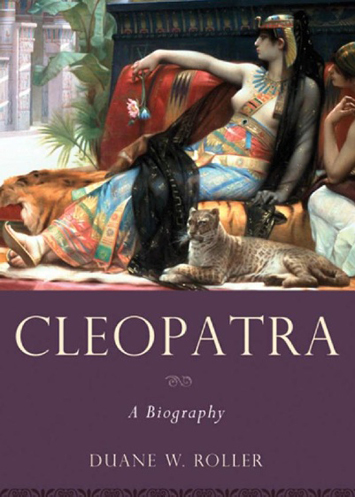
Roller's Cleopatra biography I’m working my way through three recent biographies of Cleopatra, the last Ptolemaic ruler of Egypt. As a specialist in early modern history, I’m struggling to get past my reliance on superficial readings I’d done long ago or the considerable cultural legacy she’s evoked. Yes, I know Shakespeare and Taylor’s version, but for this project, I need to leave that kind of distant imagining behind and try to approach her story more directly.

The first biography I snagged was Tyldesley’s from 2008. Cleopatra: Last Queen of Egypt is, not unexpectedly, very “Egypt-focused”. Coming from a scholar who’s published noteworthy books on Hatshepsut and Egyptian women, that was exactly what I hoped to discover. Tyldesley does a great job of putting Cleopatra’s rule into the perspective of Ptolemaic Egypt’s relatively open avenues for women to exercise economic and political power. She also does the best job of evoking the urban history of Alexandria, the great city that was her primary residence. This isn’t to say that the biography doesn’t also give a good sense of the Hellenistic dynasty of which the queen was a part. It’s simply that Tyldesley does the best job of highlighting the Egyptian as well as the Greek elements in her queenship.

The second biography I read was Stacey Schiff’s Cleopatra: A Life. Being as it’s marketed as a popular biography, I was a bit leery but Schiff has done a good job with her research in citing both classical and modern sources. Of course, she’s an accomplished biographer, so this was a flowing, easy read, full of dozens of pithy observations and commentaries from the author. That’s probably what struck me the most and not always for the best. As a historian, I remain just a bit suspect at her willingness to suggest motives for the various historical actors and come up with sweeping statements. But I have to admire her deft hand at taking the raw material (much of it out of Plutarch) and turning it into a compelling life story.

The last book, which I’m still halfway through, is Duane Roller’s Cleopatra: A Biography. Roller is a scholarly classicist and he uses his background in the Hellenistic period to paint a picture of a queen who’s part of this international, cutthroat politics. A few choices grate for anyone not steeped in the classics. For instance, his insistence on referring to Antonius instead of the more familiar modernization, Antony, will throw off some readers. (I know it’s classically correct, but so would be writing the work all in capital letters, with no spacing and so forth!) Despite my quibble, this thematically structured study of the queen is the most useful for my needs. It’s also, unmistakably, a work of a classicist who’s focused on the Hellenistic queen.

Am I done with Cleopatra? Not quite. I have a few other works on her life, reign and works still to consult for my project. But I’m amused that for all the sameness of key details, Shakespeare’s assertion about her infinite variety still holds true in the snapshot created by reading these three different studies. There’s as many Cleopatras, I suspect, as there are histories of her.

2 Comments

Filed under history, review

Histories of “bad” people

I often get asked how I can research historical personages who aren’t “nice people”. It began with my doctoral research focusing on such wonderful people as Henry VIII (he of the six wives and several executed advisers including Thomas More and Thomas Cromwell), Richard Morison (a rabidly self-promoting evangelical humanist) and other early sixteenth century figures who emerge from history, warts and all. Some of them are more appealing than others: I’ve argued that Jane Seymour gets a bump rap from modern culture that’s eager to embrace Anne Boleyn as the epitome of a liberated woman while condemning Jane as a mealy-mouthed lump. That said, I don’t think I would have liked to be a part of her court!

Let’s be honest: we spend a lot of time trying to get into the heads of our historical subjects. We attempt to read everything they wrote and everything written about them. If we’re able, we travel to places they knew well, visit their burial sites and try to catalogue their libraries and possessions.

There are days when I think I know some of my subjects better than my own relatives. I can tell you in great detail about Morison’s illegitimate children (and his provision for the same) as well as his marriage to Bridget Hussey. His widow’s subsequent two marriages and high-profile courtiership are some of the jumping-off points for my forthcoming book. She doesn’t seem to have been all that easy a person to love, either, mind you!

So, how can I spend so much time in the company of people I would never want to invite over for dinner let alone a Meeting of Minds? I suppose it’s the same way that we can sit, fascinated by the awful truths revealed on shows such as Celebrity Rehab or following the beach-bound crowd on Jersey Shore.

It can also be that there aren’t that many “nice people” to study. At least in terms of the surviving historical record, it’s more often the strivers and back-stabbers who make their mark. Even some saints strike me as people who were rather too focused on their faith to be comfortable company!

Truth be told, there may be an extra dollop of interesting to study a few of the “bad boys” and “bad women” of history. We’re eager to see if the reality of their lives measures up to the legend and how they came to terms with their actions. They track widely through the historic record and often leave a wealth of material to explore.

But the last thing that a good historian wants to do is to become so emotionally involved with the figures they’re studying that they lose perspective. I have few illusions about Henry and Richard, Jane and Bridget, but I still have a lot of questions to answer so it’s back to the sources I go!

10 Comments

Filed under history, writing/editing

The Oppression of the Trade Federation

The editors of a forthcoming collection, Star Wars and History, invite proposals for an essay to focus on parallels between business groups and practices in Star Wars (e.g., the role of the Trade Federation) and historical examples of the roles played by corporate/government partnerships such as the British and Dutch trade companies active as political and military forces as well as economic entities as well as how these parallels provided historical models for the Star Wars universe.

This essay would discuss one or two particular historical examples in depth; for example, the Dutch East India Company’s assumption of power in Indonesia, the East India Company’s different roles in India and Britain, the Hudson’s Bay Company and its territorial expansion or the trade factors in the Anglo-Chinese wars. We would ask authors to go beyond a singular focus and relate other historical examples of corporate/government integration for good and ill as it can be reflected in the Star Wars movies and universe. The book will be published in cooperation with Lucasfilm and the editors are collaborating with Mr. Lucas.

This anthology is aimed at a somewhat broader audience than is the case with most scholarly anthologies, and we seek contributors who can create essays that are engaging and accessible for undergraduate as well as older readers. Essays should run between 5,000-7,000 words, and complete drafts would be due no later than Nov. 15. Contributors would be paid honoraria of $400, and could use almost any photos, stills., etc. from the Star Wars corpus to illustrate their chapters
that they chose.

Please submit a short c.v. and one-page proposal by August 1st to both volume editors; email submissions are preferred: Continue reading

Comments Off on The Oppression of the Trade Federation

Filed under history, pop culture

Please to See the Queen

Jane Seymour still fascinates me. Her queenship is often dismissed, as in Karen Lindsay’s conclusion that she’s left an essential “lack of self” in the historical record.1 I really don’t see how you can argue that! While her time at the centre of court life was very short, she inspired controversy during her lifetime and afterward.

Jane was famously and, perhaps stereotypically for a woman, an intercessor. She helped to engineer Princess Mary’s reconciliation with her father after years of estrangement. She seems to have exhibited conservative religious leanings or sympathies for the same as in her attempted championing of the Pilgrimage of Grace, rather at odds with her own family’s growing interest in the evangelicals. Like so many women at the time and today, her appearance and behaviour have been subject to endless nitpicking, going back to at least May of 1536 when Eustace Chapuys, the imperial ambassador, described her as “not a woman of great wit, but she may have good understanding. It is said she inclines to be proud and haughty. She bears great love and reverence to the Princess. I know not if honors will make her change hereafter.”2

Only on her death did criticisms of Jane recede. She was widely celebrated, as in her extravagant epitaph which manages to be as much about her son (the future Edward VI) as it was about her:

Phoenix Jana iacet, nato Phoenice dolendum,
Secala Phoenices nulla tulisse duas.

Here, Jane the phoenix, who bore a phoenix. Grieve
That never the world knew two such phoenixes at once.

That she was mourned, at least somewhat, seems confirmed by Thomas Berthelet’s publication of A Comfortable Consolation Wherein the People May See How Far Greater Cause They Have to be Glad for the Joyful Birth of Prince Edward, Than Sorry for the Death of the Most Noble, Virtuous and Excellent Queen Jane. In this pamphlet, Richard Morison, a prolific author, fervent evangelist and client of Thomas Cromwell, evoked a popular distress at the queen’s death: “who can remember, with what vertues queen Jane was adourned, and see her grace and graces now taken from us, and not wasshe his cheekes with tears?”3

At Henry’s death in 1547, Jane was revived in public memory. She was represented, alongside Henry, on the first of the twelve “banners of descents” born at his funeral and immediately preceding the banners representing Henry and his current wife, Katherine Parr.4. More significantly, Henry had made provision in his will that he be buried alongside “the bones and body of our true and loving wyf Quene Jane”.5 Her vault in the chapel was opened in February of 1547 and the king’s coffin was there interred beside her. Plans were made to complete a grand tomb complete with effigies of both Henry and Jane but the work was never completed.6

Jane Seymour Society of Antiquaries This understudied portrait of Jane, belonging to the Society of Antiquaries, is an interesting image of the queen. Part of a portrait pair matched with Henry, it has been dated to the late 1530s or possibly the 1540s. Unlike the refined and familiar Holbein portrait, it is scant with details and finery. Her appearance confirms a dating in the 1530s or early 1540s: it appears to be a modified form of the traditional English gable headdress which Jane pointedly required of ladies in her court (as opposed to the French hood which Anne had popularized).6 Although not as evocative of a likeness as Holbein produced, this is a rich and relatively small portrait from a pair, suggesting that the two were meant to be enjoyed together. I like to think that the pair might have been painted for Edward, their son, whose only knowledge of the queen would have been through stories told him and such portrait images.

For a more leisurely consideration of Jane’s life and times, consider picking up Elizabeth Norton’s readable and well-balanced popular biography of Jane: Jane Seymour: Henry VIII’s True Love (Stroud: Amberley, 2009).

Notes:

  1. Karen Lindsey, Divorced, Beheaded, Survived: A Feminist Reinterpretation of the Wives of Henry VIII (Reading, MA: Perseus, 1995), 118.

  2. Eustace Chapuys to Antoine Perrenot. 18 May, 1536. Letters and Papers, Foreign and Domestic, of the Reign of Henry VIII, edited by J. S. Brewer, J. Gairdner and R. H. Brodie. (London: Longman, 1871). Volume 10. No. 901.

  3. Richard Morison, A Comfortable Consolation Wherein the People May See How Far Greater Cause They Have to be Glad for the Joyful Birth of Prince Edward, Than Sorry for the Death of the Most Noble, Virtuous and Excellent Queen Jane. STC 18109.5 (London: Thomas Berthelet, 1537), Aiiv.

  4. John Strype, Ecclesiastical memorials; relating chiefly to religion, and the reformation of it, and the emergencies of the Church of England, under King Henry VIII. King Edward VI. and Queen Mary the First. … In three volumes. With a large appendix to each volume, … By John Strype, M.A. (London, 1721), Vol. 2. Appendix A (11).

  5. Will of Henry VIII, king of England, France, and Ireland. 1546.” The National Archives (TNA): E 23/4.

  6. Muriel St. Clare Byrne, ed., The Lisle Letters. (Chicago: University of Chicago Press, 1981) Volume 4: 193-197.

1 Comment

Filed under history

Looking for Vikings in America

Danish archaologist Carl Christian Rafn published Antiquitates Americanae in 1837. In this treatise he argued that the tenth century Norse had sailed across the Atlantic and established a brief-lived colony that constituted the first European settlement in North America.1 Today, we know that this is true, based upon the archaeological discoveries at L’Anse Aux Meadows.

The sagas, preserved most vividly in the fourteenth century Icelandic Flateyjarbók, described voyages through areas termed as Helluland, Markland and Vinland. While all three sites were important in the sagas, it was Vinland, the site of the settlement, that drew the most attention. Most nineteenth century scholars followed Rafn’s suggestion that the three sites should be identified as Labrador, Nova Scotia and New England, respectively, but in the eyes of enthusiasts, these locations were posited “as far apart as Hudson bay in the north and Virginia in the south.”2

Rafn’s theories soon travelled beyond the rarified circles of scholarly discussion. Three years later, Asahel Davis shared these ideas in a lecture tour across the east coast. His talks on the “Discovery of America by Northmen Five Hundred Years Before Columbus” sparked lively interest.3 The idea of an American Henry Wadsworth Longfellow addressed it directly in the introduction to “The Skeleton in Armor” romanticizing a Viking in the New World by noting:

The following Ballad was suggested to me while riding on the seashore at Newport. A year or two previous a skeleton had been dug up at Fall River, clad in broken and corroded armor; and the idea occurred to me of connecting it with the Round Tower at Newport, generally known hitherto as the Old Wind-Mill, though now claimed by the Danes as a work of their early ancestors.4

Finding Vinland wasn’t just an idle intellectual exercise. As Robin Fleming noted, a central ideology of nineteenth-century American medievalism was “that race was the driving force of history and that ‘Aryan race,’ particularly its ‘Teutonic’ branch, was superior to all others.”5 In this vein, a Norse discovery and settlement of America made for a more palatable story than crediting Columbus with this exploit.

Leif Ericson statue by Anne Whitney in Boston Historians, professional and amateur, sought confirmation of the Vinland settlements in New England. Sites in Rhode Island, Connecticut and Massachusetts were put forward on the basis of geographical coincidence with the sagas or misidentified remains. Seeking to counter celebrations of the 1892 anniversary of Columbus’s voyages, one of these enthusiasts, chemist Eben Horsford published a series of books arguing for a Norse settlement underlying present-day Boston, which he dubbed Norumbega, and even commissioned a statue of Leif Ericson that still stands today on Commonwealth Avenue, commemorating this connection.6

Horsford was careful, in his lectures and writing, to distinguish his idealized Northmen from the bloodthirsty ‘Viking’ pirates of popular imagination: “They were not of the Vikings – the class that conducted predatory excursions over the then known seas . . . . They established and maintained a republican form of government, which exists to this day.”7 Nevertheless, the Norse discovery advocates could also embrace the Viking image when it suited their purpose, private funds being raised to construct, transport and display a replica of the recently restored Gokstad ship at the 1893 Chicago World Fair. The Gokstad replica was a fine example of picturesque history, yet it could not counter the growing demand among professional historians and archaeologists for ‘hard evidence’ of the Northmen in the New World.

Even as the picturesque promotion of America’s Norse prehistory reached its height in the 1880s and 90s, professional historians were becoming cautious of the cause and its claimants. The racially-charged language of ‘Aryan’ medievalism came in for sharp rebuke in the early issues of the American Historical Review and the popularizers’ extravagances of narrative decoration and fanciful detail came in for scorn in their scholarly reviews. The spectacular discovery of the Kensington Runestone in Minnesota, in 1898, soon followed by its unmasking as a fraud, only deepened scholarly suspicion of these settlement claims.8 But popular interest in discovering a Norse settlement site in the United States remained strong, well into the 20th century.

Notes:

  1. Andrew Wawn, The Vikings and the Victorians (Cambridge: D.S. Brewer, 2000), 40.

  2. Magnus Magnusson and Hermann Pálsson, introduction to The Vinland Sagas: The Norse Discovery of America, (Harmondsworth: Penguin, 1965), 8.

  3. Asahel Davis, A Lecture on the Discovery of America by Northmen Five Hundred Years Before Columbus, Fourth Edition, (New York: Samuel Colman, 1839).

  4. Henry Wadsworth Longfellow, Ballads and Other Poems.

  5. Robin Fleming, “Picturesque History and the Medieval in Nineteenth-Century America”, American Historical Review 100:4 (Oct., 1995), 1078.

  6. Fleming, 1080-1081.

  7. Horsford, cited in Fleming, 1081-1082.

  8. Stephen Williams, Fantastic Archaeology: The Wild Side of North American Prehistory. Philadephia: University of Pennsylvania Press, 1991.

Comments Off on Looking for Vikings in America

Filed under history

The Sad End of Mary Broadbent

In my conference presentation at the Berks and again in my post on Criminally Wicked Stepmothers, I made mention of the case of Mary Broadbent. At about ten years of age in 1726, Mary was charged by her own father with theft, all with the hearty agreement of Mary’s stepmother. The court case revealed that the senior Broadbents were fabricating evidence against Mary and other neighbour women, simply hoping, in the words of Mary’s uncle, Mr. Hudson, (Broadbent’s brother-in-law):

The Child has met with such cruel Usage from the Prosecutor and his Wife, that she would run to any of the Neighbours for Succour. I was coming down one Morning, and found her upon my Stairs, where I understood, that she had lain all Night; for I being a Bed, when she came home, she would not knock at my Chamber Door, and was afraid to go home. I went to her Father, and asks him how he could use his own Child in such a Manner What’s that to you, says he. Have ye a Mind she should come to be Hang’d or Transported? Says he, I don’t care, if I can but get rid of her.1

It was heartening to read that the jury acquited Mary and the neighbour women against these trumped-up charges, even more so when the judgment included provisions to transfer Mary to the care of her aunt and uncle at a hefty 10l. charge to her delinquent father.2

But three years later in the summer of 1729, in the St. Martin’s Workhouse register, a Mary Broadbent appears, twice in a short space of time.3 Sure, she might not be the same person. Her age is listed at sixteen, not thirteen or fourteen as we’d expect. But ages in early modern records are notoriously unreliable, especially for someone who’d come from a family so dysfunctional as to drive a young girl to run away repeatedly and sleep on the stoop of her uncle’s house rather wake her relatives or stay at home.

I believe that this is our Mary Broadbent based on a further record from October of 1729. In this account, a Mary Broadbent, aged fifteen, appears in the Pauper Examinations of the same parish and the brief mention is very revealing:

Mary Broadbent aged upwds of 15 yers Says she was never an Apprentice never Marrd never a yearly hired Servt for the Space of Twelve months Says she was born in the Strand in the Parish of St Martin in the ffields where her ffather kept house knows not what rent he paid but he pd all Taxes & now Lives & keeps shop in St Martins Lane4

That fits all too well with what we know of Paul Broadbent, the prosecutor and father in the first case. And her age dropping back down fits even more closely with the profile of young Mary the accused.

Did Mary’s aunt or uncle die or simply tire of caring for her? Did her father cease paying the court-mandated maintenance and young Mary leave the Hudsons’ home, rather than be a burden on her charitable relatives? We will never know, although the excellent historical background articles on The Parish Poor and “Workhouses” shed light on the practices put in place to try to ensure that support was only given to those the parish owed a duty and on what terms.5 (See also the excellent Pauper Lives Project website.)

Mary Broadbent disappears from the records for some years, only reappearing in 1763, again as a pauper in the St. Martin’s Workhouse register. Her age is listed as 43 which departs even moreso from the first mention. Might this be a different Mary Broadbent? The register suggests not, recording that Mary has been admitted twice before.6 This has to be our Mary!

From here on, an intermittent record attests to Mary’s marginal life. She’s readmitted in 1769 and twice in 1772, changing wards (I need to check and see if this is the ward boundaries shifting or suggests that she was itinerant).7

1777 marks her last appearance in the historical record. Mary Broadbent, pauper, died in the workhouse on the 16th of April, reportedly 64 years of age, just short of two months after her final admission.8 I found no marriage records and the parish documents would seem to suggest that Mary didn’t make it far from where she started in terms of poverty and troubles. We know today that a bad start in life is difficult to overcome. How much more was that the case for Mary Broadbent in the eighteenth century, victimized by her father and stepmother and only briefly succoured by her aunt and uncle? I might almost title this “The Stepmother’s Revenge” but I think Mary’s father played the biggest role in limiting her future.

Notes

  1. Old Bailey Proceedings Online (www.oldbaileyonline.org, version 6.0, 28 June 2011), April 1726, trial of Mary Broadbent Mary Cosier Mary Harding Phillis Harding (t17260420-63).

  2. Ibid.

  3. St Martin’s in the Fields Pauper Biographies Project, Workhouse Admissions and Discharge Registers, 19th June 1729 – 10th July 1729, London Lives, smdswhr_49_4943 (www.londonlives.org, 27 June 2011), Westminster Archives Centre, Ms. F4002.

  4. St Martin’s in the Fields Pauper Biographies Project, St Martin in the Fields Pauper Examinations, 1725-1793, 22nd October 1729, London Lives, smdsset_14_1487 (www.londonlives.org, 27 June 2011), Westminster Archives Centre, Ms. F5022.

  5. Tim Hitchcock, Sharon Howard and Robert Shoemaker, “The Parish Poor” and “Workhouses”, London Lives, 1690-1800 (www.londonlives.org, 27 June 2011).

  6. St Martin’s in the Fields Pauper Biographies Project, Workhouse Admissions and Discharge Registers, 20th January 1763 – 26th January 1763, London Lives, smdswhr_401_40121 (www.londonlives.org, 27 June 2011), Westminster Archives Centre, Ms. F4076.

  7. St Martin’s in the Fields Pauper Biographies Project, Workhouse Admissions and Discharge Registers, 23rd May 1769 – 1st June 1769, 27th August 1772 – 7th November 1772 and 24th November 1772 – 17th June 1774, London Lives, smdswhr_407_40728, smdswhr_462_46239 and smdswhr_462_46272 (www.londonlives.org, 27 June 2011), Westminster Archives Centre, Ms. F4076 and F4077.

  8. St Martin’s in the Fields Pauper Biographies Project, Workhouse Admissions and Discharge Registers, 25th February 1777 – 16th April 1777, London Lives, smdswhr_468_46896 (www.londonlives.org, 27 June 2011), Westminster Archives Centre, Ms. F4077.

2 Comments

Filed under history

Witchery With Wordle

Wordle: Hopkins' The Discoverie of Witches (1647) In Twilight and History, I showed how Carlisle Cullen’s story could be seen as a rough parallel to the career of Matthew Hopkins. His witch-hunting career was carried out with an eye toward publicity and profit, hence the publication of this book, The Discovery of Witches to stir up more interest in Hopkin’s pricey services. Where Hopkins sought the limelight, Cullen didn’t. Where Hopkins revelled in hunting down witches, Cullen did not. All told, Carlisle is definitely a hero for the modern age; Hopkins is very much out of fashion.

I like to look at the Wordle I created from that treatise, if only to see how very revealing the language is. (If you’re wondering what the prominent “Quer” and “Answ” or “Ans” mean, they’re short for Query and Answer. Parts of the book are structured as question and answer with the expert on witch hunting, Matthew Hopkins.) The words that it highlights revolve around the presumed practices of witchcraft as well as Hopkins’ specialty of finding those witches out. It’s not a bad proxy for the book, itself, in that respect.

I have to say that I far prefer Deborah Harkness’s A Discovery of Witches both for readability and subject matter.

Comments Off on Witchery With Wordle

Filed under history, pop culture