Fear of Feedback

Now that another chapter’s out the door, I can confess: I’m afraid to look at feedback on my written work. When I get a chapter back from my editor or comments on a proposal for a conference, my adrenaline surges as I stare at the item in the inbox.

I’m afraid to click on it. Utterly, wildly terrified.

Isn’t that sad? A bit embarrassing, too. I’ve only rarely been savaged as a writer and never by an editor. My submissions have been rejected a few times, but not too often. I’ve even received a healthy share of compliments on my writing, historical research and argumentation. After all, I’ve been doing this for more than twenty years.

In fact, I realize that I love to write. I love to write my popular culture and history pieces. I love to write professional history for more sober venues. I love the thrill of trying out a new interpretation or putting together some sources in a novel argument. It’s fun, it’s rewarding and even a little bit exhilarating. When a piece is in pretty good shape, I’m even quite happy to send it off to a journal editor or in response to a call for papers. There’s a real thrill that accompanies that moment when I click “SEND” on the email submission.

So you’d think I could handle clicking on the link to an email with feedback about my writing without breaking a sweat, right? Wrong! I steel myself to do that, reading through the response as fast as I can. Do they hate it? Do they want to forget they ever read it (or knew me?)? Do they just have a few problems they want to fix?

Sometimes that notice that they’re requesting revisions can be even worse for assuaging that horrible roiling in your stomach. Then you have to open up the attachments, be they readers’ reports or editorial mark-up, and see what’s really required. Which often isn’t all that daunting – change this, cut that, expand this – had I considered revising the argument here to use X, Y or Z to illustrate the point more directly?

I read the comments through to the end and, invariably, I perk up. I think, “I can do this! I can take this criticism and use it to improve my piece.” I might also grumble a bit as I think that asking to cut that one super-cool example or comparison from my magnum opus is so unfair. Occasionally, I will push back and fight to retain an element that’s been challenged. But if my editor is someone I trust to know the field, the professional expectations and the audience, I usually just sigh, give into their criticism and pile up the outtakes for future blog fodder.

But the long minutes that pass while I try to stare down the unopened email from the editor, sitting there in all of its bold-font urgency, wondering what’s in the feedback? Those are still some of the most difficult moments in my professional life.

How does it feel for you?

8 Comments

Filed under writing/editing

Review: Regionalism and the Reading Class

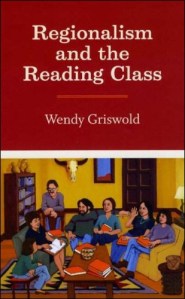
Regionalism and the Reading Class cover I got this book through recent sale held by the University of Chicago Press. While not a work of academic history (my usual term-time fare), I thought it relevant because of my graduate methods course teaching in which I’ve incorporated a history of media segment.

An accomplished interdisciplinary scholar (holding appointments at two universities in sociology, comparative literature, English and human geography), Wendy Griswold takes a synthetic, transnational approach to modern reading cultures. Refreshingly, this isn’t a work solely about the United States, although regionalism and reading cultures in the USA figures into her broader argument linking the local form of a reading class to the sense of regional identity. In Italy, Norway and the United States, Griswold tracks very different experiences of each of these elements: from Italy’s less-robust reading class coexisting with a celebrated and cosmopolitan literary culture to Norway’s effective use of state resources for promoting regional literature nationally to the way in which reader movements across

Griswold employs some fascinating models and arguments. I fell a little bit in love with her term for readers who’ve moved into new regions: cowbirds (due to that species’ ease in taking over the nests of other birds and settling right in). I also appreciated her approach to defining the reading class in which she’s clearly talking about not just literate people but those who both value the practice and dedicate time to it in their busy lives. Griswold challenges the accepted orthodoxy that more time on the internet means less time for reading, drawing on a range of research.

Griswold finishes her chapter on “The Reading Class” with three key points that form her prediction for the future of the reading class. First, that reading enjoys a long-standing prestige in almost every country. Second, that reading is intensely dependent upon social organization beginning with education and culminating in reader-driven interaction (in reading groups, which she studies closely as well as currently popular sites I’d throw into the mix such as Goodreads. Third, and for Griswold, one of the most interesting prospects, is a growing gap she documents between reading for practice and reading “as an esteemed, cultivated, supported practice of an educated elite.” [68]

Here’s where we differ. For this last part, Griswold limits herself dramatically. Those works that she deems particular to the reading practices of the reading class are literature, serious nonfiction, books “of the quality press”. And while those books are certainly important, is this enough to define the reading class? Elsewhere in the book she shows how genre fiction (mysteries, westerns, etc.) also are important works in regional reading classes – evoking a sense of place, community and shared experience that helps to build a strong regional culture. Yet, in this prediction we see those other literary genres excluded and this is a problem. As long as only ‘serious nonfiction, books of the quality press’ are going to define the reading class, much of the experience of devoted and socially-engaged readers will pass by researchers, even those as able as Griswold.
See also this lucid review by Tara Brabazon.

Comments Off on Review: Regionalism and the Reading Class

Filed under review

Snow Day: A Professor’s Perspective

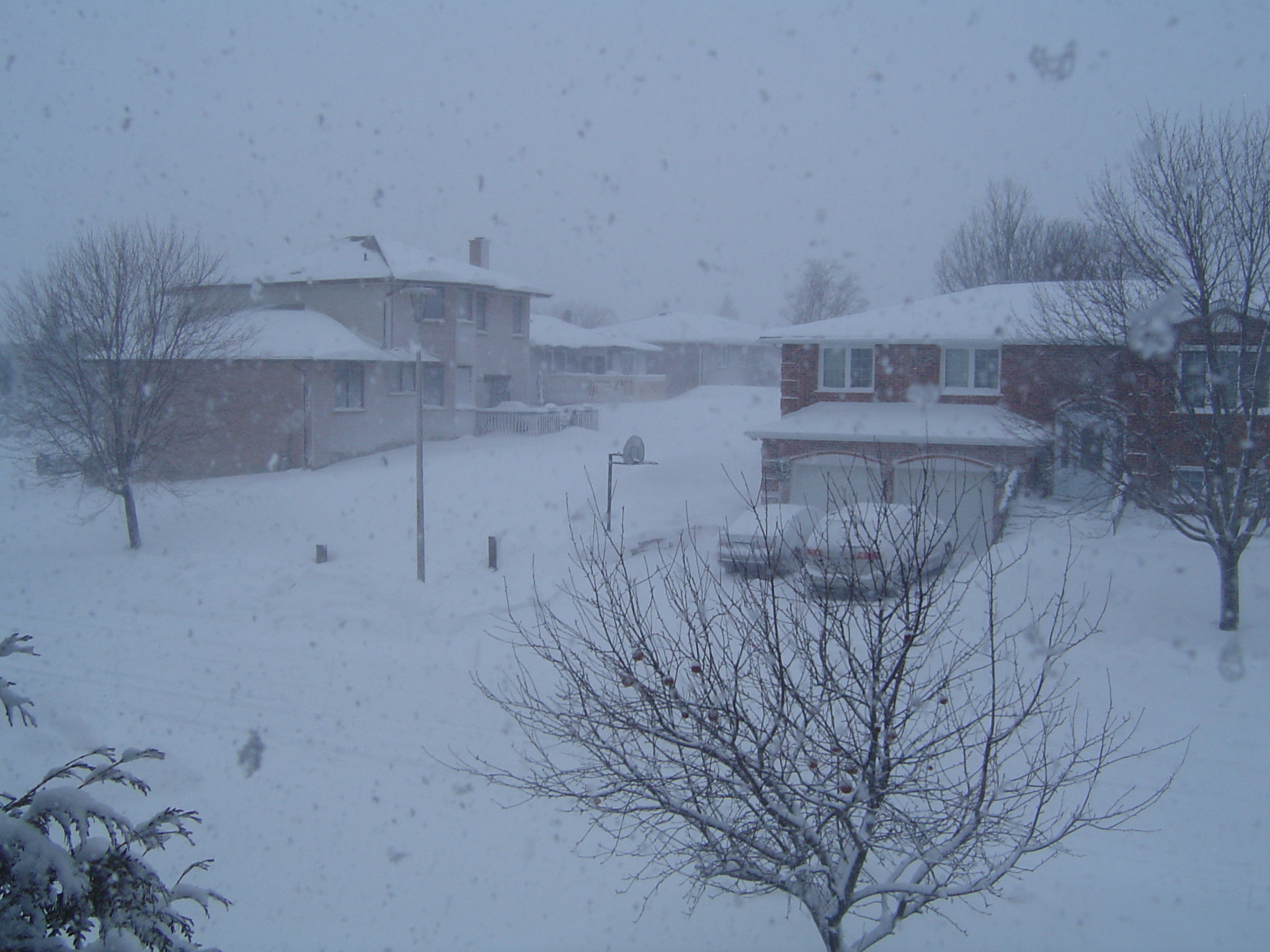
Woke up before dawn this morning and raced out of the bedroom to rouse my computer from sleep mode as I peered out the living room window to a discouraging scene. Winds roared from the south, racing up our street. In the dark distance of the corner where our street meets another, a car struggled fruitlessly to negotiate the unplowed turn until a neighbour popped out of his door to help the driver. The bus service website informed me that school buses were cancelled. The weather site’s alert switched from a “Snow Squall Watch” to “Snow Squall Warning” while I watched. Snow began to cling to the window.

So, reader, I cancelled class. All on my own. I wasn’t going to wait for the university to not do so (our “Inclement Weather Policy” is insanely cautious, based on the optimistic idea that everyone can get into university if they really try and many students live on campus anyway). Yours truly lives a five kilometer trek from campus up and down slippery hillsides featuring a laughable walking path for a small portion of the hike. And public transit in our city is a joke, especially in my neighbourhood, even though it’s located within spitting distance of a major road. Those pesky rock cuts and sheer drops mean there’s no easy way for feet to take you from here to there. But I digress. . . .

Unlike school kids, I don’t thrill to a cancellation. First off, I prepare mightily for a class. It’s much more work to have to do the origami of class reorganization when I cancel a class as it is to teach it. If something is on the syllabus, it’s important for the students’ learning and that means I need to try and find ways to cover at least part of the material. So now I’m splitting up a class on Bronze Age Mesopotamian religion and shoe-horning the bits into next week’s discussion of Mesopotamian social order and economies along with another section prefacing the Sargonids.

Secondly, it’s a fair bit of work to actually cancel a class. Trying to make the antiquated and annoying email options in our course management software actually get emails that anyone will receive? Worrisome. Trying to import a class list of emails into our regular campus email system? Frustrating as the system seems to cap somewhere around twenty BCCs. 80 students in the class, you do the math. (Obviously, I need to get all of them on a Facebook group or following a Twitter feed but you try herding undergraduates to an optional technology platform. It’s impossible.)

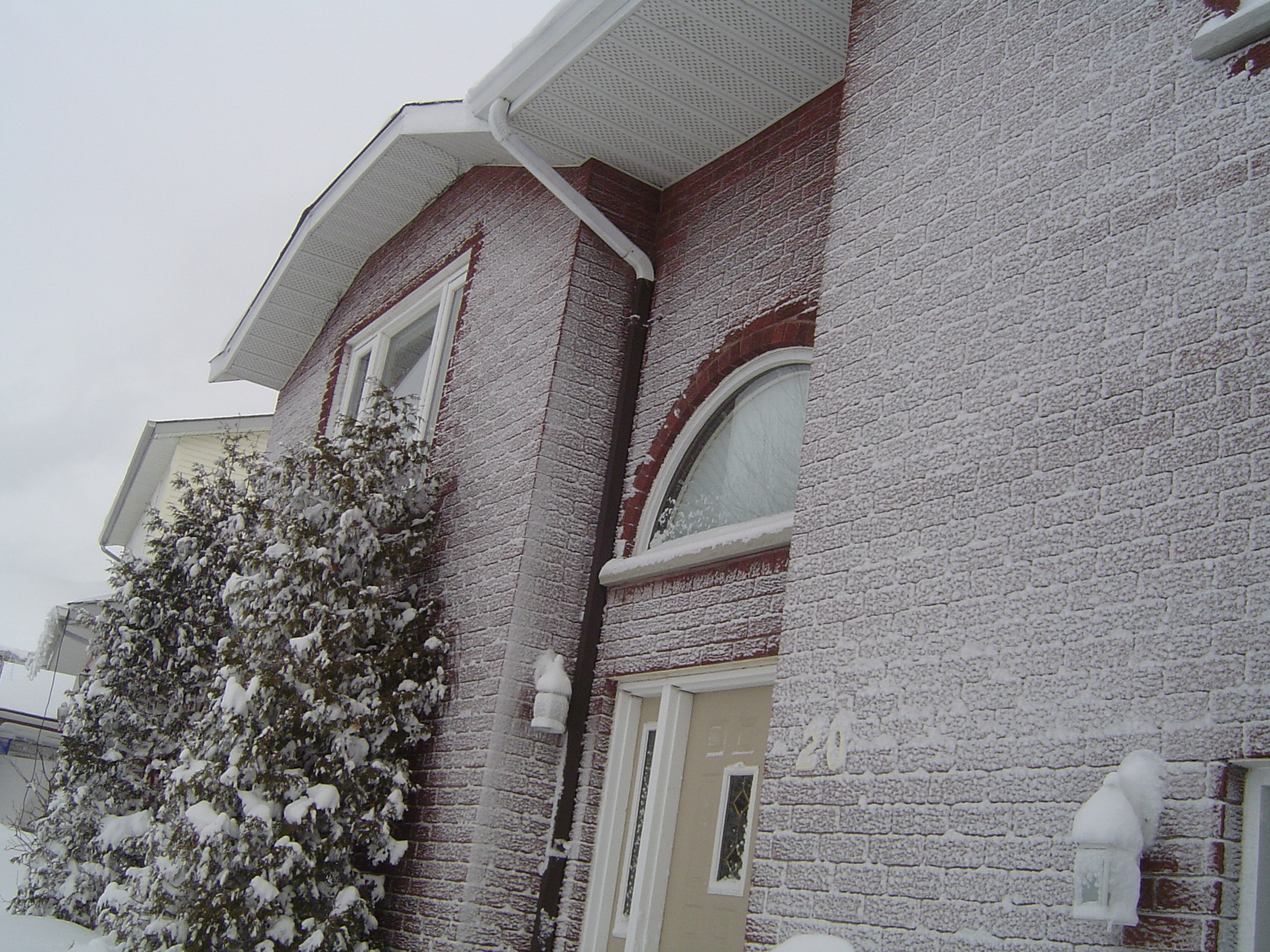
Our house, snow bedecked!Most annoying? I don’t get to sleep in. I don’t “take a day off”. I add in several hours worth of additional work with contacting students, answering queries, reorganizing material and then shoveling the damned stuff. (6-8 inches of new fall, drifts up to mid-thigh on me and I am not a short woman.) Mike and Eldest have also done more than their fair share of snow moving since the snow plows finally came by a bit before noon. He’ll have to go out for his evening shift at work. I’ll be home, swotting up on more course readings and prepared to shovel us out after the snowplows run through a second time.

6 Comments

Filed under academe, teaching

Victoria and the Expectations of Queenship

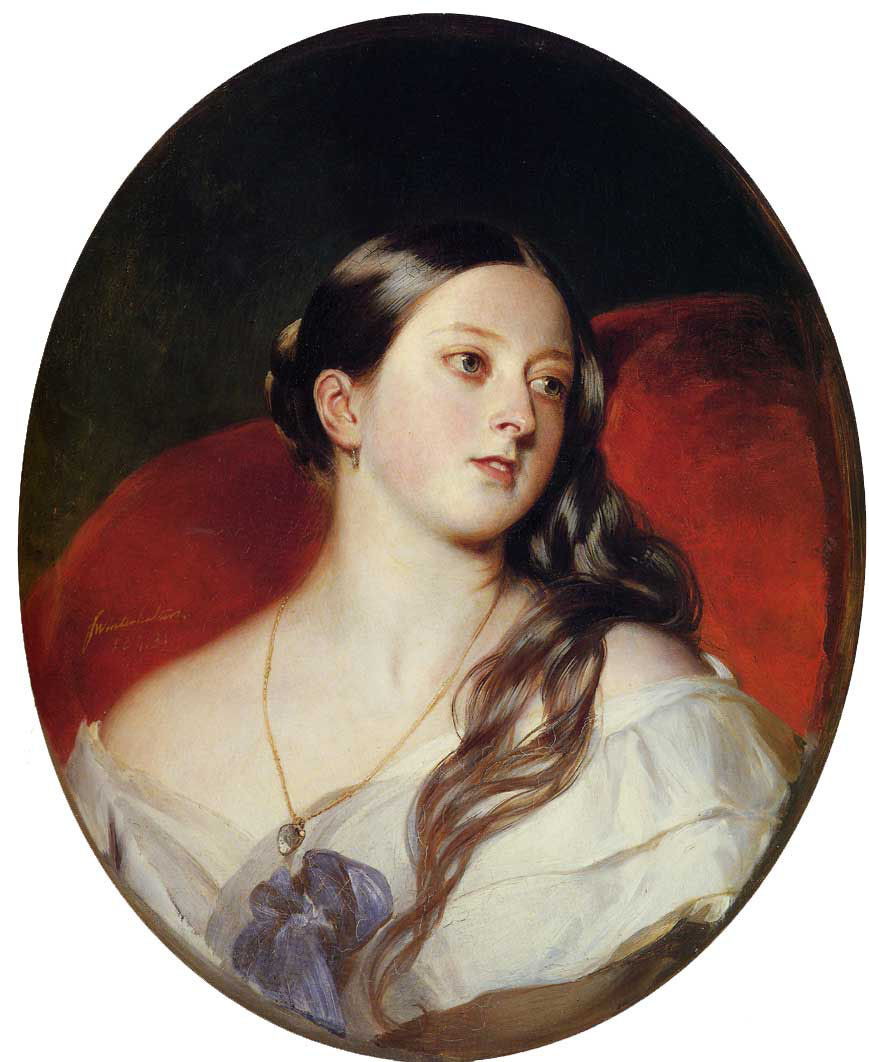
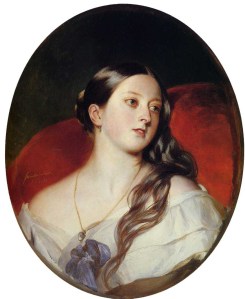
Queen Victoria, 1843 (An outtake from my latest pop culture and history project.)

From soon after her birth in 1819, it was clear that Victoria would inherit the English throne. The childbed death of her cousin, Princess Charlotte, left a succession of aging men to sit the British throne, none of them with sons who could inherit. Young Victoria was raised away from the limelight of the royal court in her mother’s isolated household within Kensington Palace. Seemingly innocent of her destiny until she was provided with a genealogical chart that showed she was next in line to the throne, the young princess solemnly promised her governess, “I will be good.”

When she took the throne not seven years later, Victoria did just that: setting a model of virtuous conduct that endeared her to a nation. But it was clear that some in the country were nervous about the accession. At the outset of her reign, The Guardian expressed reservations about her youth and character.

The accession of our young queen is a circumstance full of hope and promise. Humanly speaking, it is perhaps desirable that the event should have been postponed a few years, that her character might have become more fixed, and her acquaintance with the world and with those branches of knowledge which are peculiarly appropriate to her situation and her duties, more enlarged. But it has been ordained otherwise, and, we have no doubt, ordained for the best. From all that we have read and heard, her majesty’s conduct hitherto seems to have been marked by great propriety both of feeling and demeanour.

Speaking of William IV, Victoria’s immediate predecessor, The Guardian elaborated on the question of personal conduct:

It is often said that the public has no concern with the private lives of princes. We are not of that opinion. For whilst we would neither seek to create nor to gratify a prurient appetite for scandal, in relation to a subject with respect to which that appetite is so easily excited as the vices or follies of the great, we do feel that it is a circumstance which strongly conduces to the welfare and interest of a nation, when the monarch, instead of being an insulated and selfish voluptuary, is known to be constant and unostentatious in the fulfilment of domestic duties, and the natural display of tender and virtuous affections. – The Guardian, 24 June, 1837

While William and Adelaide were a contented couple on the throne, William’s past wasn’t always so flawless. This report completely overlooks his long liasion with Mrs. Jordan by which the happy couple had ten illegitimate children that preceded his late-in-life marriage to Adelaide. But it’s clear from both the reservations about Victoria and the happy recollection of William that some in the country were concerned with the new queen’s prospects. Would she hew more to the model of her late uncle William in ensuring that her time on the throne was a period of relative sobriety with a royal focus on good government or would her reign be touched by scandal and discord as had coloured the monarchy of her other uncle, George IV?

Victoria was fortunate in that she was old enough upon her accession to rule in her own right, without her domineering mother (and her mother’s ambitious aide, John Conroy) to exert their influence. Alison Plowden suggests that her beloved governess, Louisa Lehzen was the key. To this I’d also add the broader cultural context of childhood and the Georgian concepts of virtue which filtered into Victoria’s schoolroom (consult Lynne Vallone’s nuanced study for some excellent examples).

Of course, the next expectation that Victoria had to fulfill was marriage and securing the succession. Since Charlotte’s childbirth death, the royal succession was extremely fragile. Victoria married a dashing young prince, Albert of Saxe-Coburg and Gotha, with whom she appeared to be deeply in love. While marriage was clearly desirable, opposition arose to their union mostly in the grumblings among some Englishmen at the prospect of yet another foreign consort, in the model of Princess Charlotte’s widower enriching himself from England’s industrial plenty.

Victoria’s marriage was not simply for the benefit of the state. Her personal investment in the relationship was both the touchstone of Victorian ideals of domesticity but also a danger sign for the stability of the monarchy. Victoria and Albert enjoyed over twenty years of marriage before tragedy intervened when he fell ill with typhoid fever. Albert`s death in 1861 was a difficult blow for the queen. Even with their nine children and a nation to lead, Victoria found it hard to carry on. The devastated queen withdrew from public life for a decade and this act of mourning alienated her from many of her subjects. In 1864, someone anonymously affixed a satirical poster to the gates of Buckingham Palace, offering the property “to be let or sold in consequence of the late occupant`s declining business”. Victoria finally returned to public life in 1871 but never gave up the black mourning dress worn to remember her beloved Albert. Inspiring a ten-year withdrawal, the virtuous conduct of the genuinely grief-stricken widow was not what the pundits and wags would have wanted, but Victoria was clearly her own woman in this and in other ways.

References:

Alison Plowden. The Young Victoria. (New York: Stein and Day, 1983).

“The Accession of Queen Victoria.” The Guardian. 24 June, 1837. http://www.guardian.co.uk/uk/1837/jun/24/monarchy.fromthearchive Accessed 17 January, 2012.

Lynne Vallone. Becoming Victoria.. (New Haven: Yale University Press, 2001).

1 Comment

Filed under history

Return of the Term

It’s ba-ack! The term, that is. Run and hide in fear!

Actually, this term isn’t half so bad as last term. Half the classes, pretty much, and nearly down by half the enrollments. One class is brand-spanking new: a seminar on later medieval chronicles. However, since I’d planned and proposed this course several years ago as a logical extension of my existing seminar in early medieval chronicles, it feels familiar. The other undergraduate course is my survey of the ancient Near East and that course really is a well-oiled machine thanks to a fabulous textbook and a lot of planning in the past. It takes relatively little time to update material when it’s this well-organized. Finally, the graduate reading course appears like it will continue to be a rewarding class that I have two students working on overlapping material so they can support each other more readily.

The best part of this term, however? Not teaching five days a week. Really, if I’m going to be ramping up my research and publishing the way I’m supposed to do so, I need a day to step back and really get things done without interruption. Even if I leave myself copious “bread crumbs” in the form of notes, it takes some time to get the writing and research back on track. That’s why I’m loving Mondays, now!

Of course, Murphy’s Law meant that I had to make an unexpected trip into campus to ensure a student’s letter of recommendation got in on time. Oh, well. The day was still pretty darned productive as I simply zipped on and off campus as quickly as possible so I could get back to my revisions. I’m happy to report those are done and hopefully there will be many more productive Mondays in the weeks to come.

2 Comments

Filed under academe, teaching, writing/editing

Ask the Right Question

Last term I instituted a new scheme in my intermediate level courses: require short presentations on pre-assigned discussion questions from every student and recycle those questions as essay fodder for the tests and exams. It’s done a fair bit of what I want: ensure that even in a class of eighty, students were speaking every day without my resorting to picking faces out of the crowd. It also led to a lively culture on the discussion boards in our course software as part of the mark was not only for oral presentation, but for posting a polished version of that classroom comment and then responding to others.

I’ve had a lot of positive feedback from students who’ve appreciated this system, particularly that the questions are provided ahead of time so they can prepare for class with that opening theme in mind as well as know that can guide them in test preparation. I’m sure that there are others who’re not quite so happy, of course. I hope none of them are as disenchanted as this group of students at Utah Valley University but I do have tenure and a supportive administration behind me. (Of course, I accommodate students who can’t do oral presentations, say, for the student who has a nasty sore throat on the day – they can provide me a short paragraph, suitable to project via PowerPoint and I’ll share that in class with an invitation for the entire class to respond. But there were only 3 students who needed that accommodation in last term’s survey of eighty!)

I’m finding that the most difficult part of this is designing the best question that I can for each class session. I’m writing questions with the day’s reading in mind. Sometimes the text offers a great opening for interpretation and debate. Other times the ‘angle’ isn’t so obvious and I waffle for hours, reworking the question until I find something with which I’m happy. Because I’ve committed myself to not only using the questions in the class session, but also in the tests, they also have to be open for a broader, thematic analysis when it comes time for the quiz, midterm or semester final exam. So spending time on the questions pays off. That’s how I spent a great deal of time in the week leading up to course launch: tweaking with the discussion question list. Now it’s set in stone and I have a bunch of class sessions already full subscribed with students who’re excited to prepare for their turn.

They’re not magic tools but pre-circulated discussion questions with students presentations are definitely staying in my survey repetoire!

6 Comments

Filed under history, teaching

Once More Into the Breach

Classes start on Wednesday. I start teaching again on Thursday morning and I’m sort of, almost!, ready. My Desire2Learn shell is up and running for the second-year survey on the Ancient Near East and the course outline was in our admin’s hands well before term wrapped up. Preparing the online component of the course was a chore and a half. I realize I still have one assignment folder still to create: the discussions assignment since I’m continuing last term’s successful experiment in requiring discussions in a large-scale sophomore survey. I require every student in the class of eighty to present on the daily discussion question once during the term, post a refined version of their response and then respond to at least two others. That means that some days we can have five presentations! They’re all short (I advise students not to prepare more than a page of text to guide them) but I sweeten the pot by recycling the questions for essays on the tests so students have incentive to prepare and pay attention!

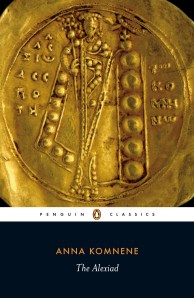
I’ve also finally figured out the intractable scheduling problem for the senior seminar: in order to spend two weeks on The Alexiad, we’re covering Villehardouin and Joinville in one week. Since the latter two are only in excerpts in our course custom reader, that’s okay in my book. I’m happily anticipating finally teaching this inaugural seminar on later medieval chronicles and that means taking some time with some sources (they’ll also read all of the Gesta Tancredi and The Chronicle of Bury St. Edmunds). We’re also going to start and finish the course with women authors: Anna Komnene and Margery Kempe – that has me excited!

However, I feel a little bit whip-lashed with term starting back up again so soon. I suspect my students will feel that even more as exams were scheduled right up until the 21st or 22nd. Everyone’s going to be tired and cranky when I head back to the office. We’re entering into the long, dark, bitterly cold heart of winter that doesn’t help one iota. January term is the cruelest term from that perspective!

How is the new year treating you?

4 Comments

Filed under teaching

Gaudete

Happy Holidays

Tempus adest gratiæ
Hoc quod optabamus,
Carmina lætitiæ
Devote reddamus.
Piae Cantiones (1582)

(In other words, marking is done and I’m off to celebrate with my family!)

2 Comments

Filed under personal

Three Down, One to Go

I’ve submitted marks for three of my classes, now only the last group remains. It’s all down to how quickly I can plow through about seventy final exams. I don’t want to waste time counting them up: the total would be enough to make my cry in any case.

Once again, I will note my bemusement with the many students who have handed in not a single assignment for the course but still come in to write the final exam. Even when it’s worth 35% of the course mark, anyone should see that’s insufficient for a pass!

2 Comments

Filed under teaching

Cause Kittens Don’t Keep

There’s a new addition to the household: Sisu, the six-month-old Siberian. Her name is Finnish: a word that means determination in the face of adversity. Consider her the ultimate stress-reducer for the professor in grading jail: Sisu is shameless about crawling into my lap whether I have a laptop or a pile of papers. It slows me down a bit but I don’t mind.

DSC01059

16 Comments

Filed under pets